

You probably tap your phone or swipe a debit card for almost everything. We all do! It’s a digital world. Then, one day…somebody asks for a check.
Yes, checkbooks are still a thing. People still use checks for certain things when they’re asked or required, like for rent or security deposits, or maybe to pay a local contractor. Some school or club payments still use them. You could also run into a request for a voided check when setting up direct deposit.
If you've never filled one out, have no fear. The layout has a lot of blanks, but it’s not as hard as it looks. A personal check is basically just an instruction to your bank to pay a specific person or business from your checking account.
How to Write a Check in 6 Steps (and 1 Optional Step!)
The FDIC's Money Smart curriculum for high school students uses a six-step example showing the major fields on a personal check.
- Confirm the account. The numbers already printed along the bottom are your bank’s routing number, then a space, then your personal account number. If you have more than one checkbook or use multiple banks, make sure you’re using a check to the correct account.
- Write the date. Put the date in the upper-right corner.
- Name the person or business getting paid. Write the full name on the "Pay to the Order of" line.
- Write the amount in numbers. In the example check below, a $160.50 payment goes in the small amount box as 160.50.
- Write the amount in words. Spell out the dollar amount on the line below the payee. Write the cents as a fraction of 100. The example payment of $160.50 would be written out as “One hundred sixty and 50/100.”
- Sign the check. Your signature authorizes the payment. Fill out everything else first. (If you sign a check and leave the dollar amount blank, that’s a “blank check” and anyone who has it could fill in any number they like. Risky! Anyone remember this old movie?)
That’s all you are required to do to complete a check!
However, you may notice there’s still one blank area remaining, right above the routing and account numbers (in the image below it’s been filled in with “car rental”). This field is called the “memo line,” and it is optional. So here’s your optional extra step:
- Use the memo line if you need it. You could use it to write "October rent" or an invoice number as a helpful reminder and record of what the payment was for.
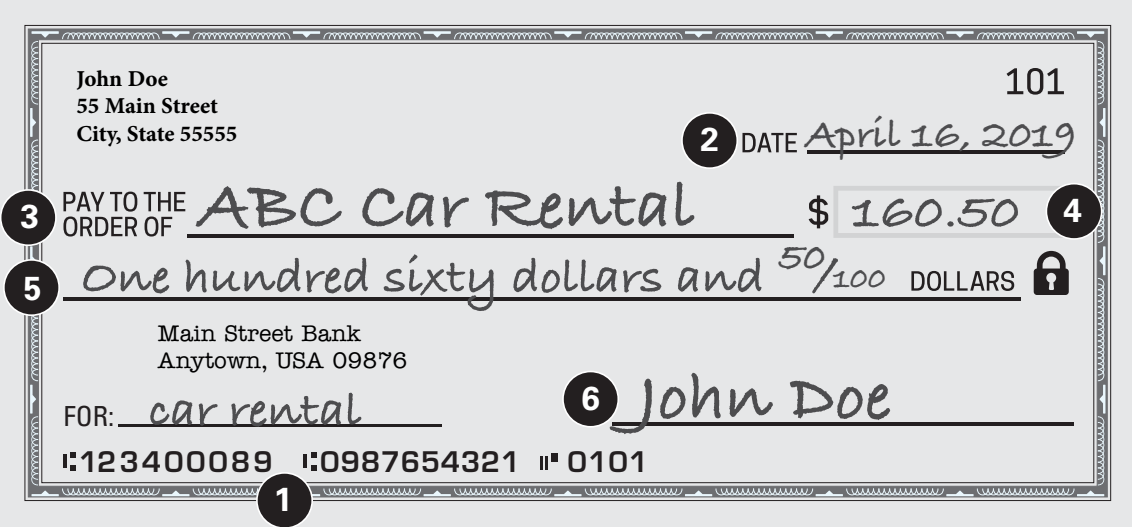
Image Source: FDIC
What Happens After You Write the Check?
The recipient deposits or cashes it. Your bank then subtracts the amount from your checking account.
Unlike a debit card purchase, a paper check does not necessarily appear in your balance right away. Keep track of checks you've written while they are still outstanding. The FDIC recommends you stay current with checks and other account transactions so you know how much money remains available.
How Do You Endorse a Check?
When somebody writes a check to you, the back side is for you to fill out. Yes, checks have a back side! It’s simple, though…just an endorsement line.
Sign your name in the endorsement area when you're ready to deposit it. Mobile deposit sometimes requires additional wording, so follow the instructions in your banking app.
If you're the person writing the check, leave the back unsigned. The person receiving it handles the endorsement.
What Is a Voided Check?
A voided check is a check no one can use because you’ve marked it “void.” It’s not filled out. The point is that the voided check provides the recipient your routing and account numbers without making any payments.
Write VOID clearly across the front and leave it unsigned. Employers sometimes request one while setting up direct deposit. Companies also use them sometimes to arrange electronic withdrawals from a checking account.
Give It One Last Look
Check the recipient's name. Make sure the numerical amount matches the written amount. Confirm the date and add your signature last.
Checks are old-timey and less common than they once were — and they’re likely to be even less common every year. You may write only a handful of checks in your life!
Still, when somebody hands you a payment form from the previous century, now you'll know exactly what to do.